5 Small Business Ideas Anyone Can Get Into

Sarah Jenkins
Managing Editor, Borrowing · Updated October 2026
Sarah Jenkins
Managing Editor, Borrowing · Updated October 2026
In early 2026, the economic landscape has shifted toward a 'gig-to-growth' model where individuals are increasingly looking to diversify their income streams. You might be sitting at your kitchen table right now, staring at a spreadsheet and wondering if you could actually make it on your own. There is a common misconception that starting a business requires a massive inheritance or a million-dollar venture capital round. In reality, many successful entrepreneurs in 2026 are launching ventures with less than $3,000 in initial capital. Whether you want to escape the corporate grind or simply build a secondary revenue stream, the barriers to entry have never been lower.
However, low cost does not mean low effort. As we look at the economic landscape for 2026, understanding your startup costs is vital. For instance, if you were to secure a microloan of $5,000 at an APR of 12% over 36 months, your monthly repayment would be approximately $166 . Understanding these numbers before you dive in is the difference between a sustainable business and a financial burden. As we navigate this year, it is important to remember that while many paths exist, success depends heavily on local market demand and personal execution.
This article will help you decide which of these five industries aligns best with your current skill set and available capital. We will move beyond the surface-level advice and look at actual numbers, potential pitfalls, and the decision frameworks you need to transition from employee to owner successfully.
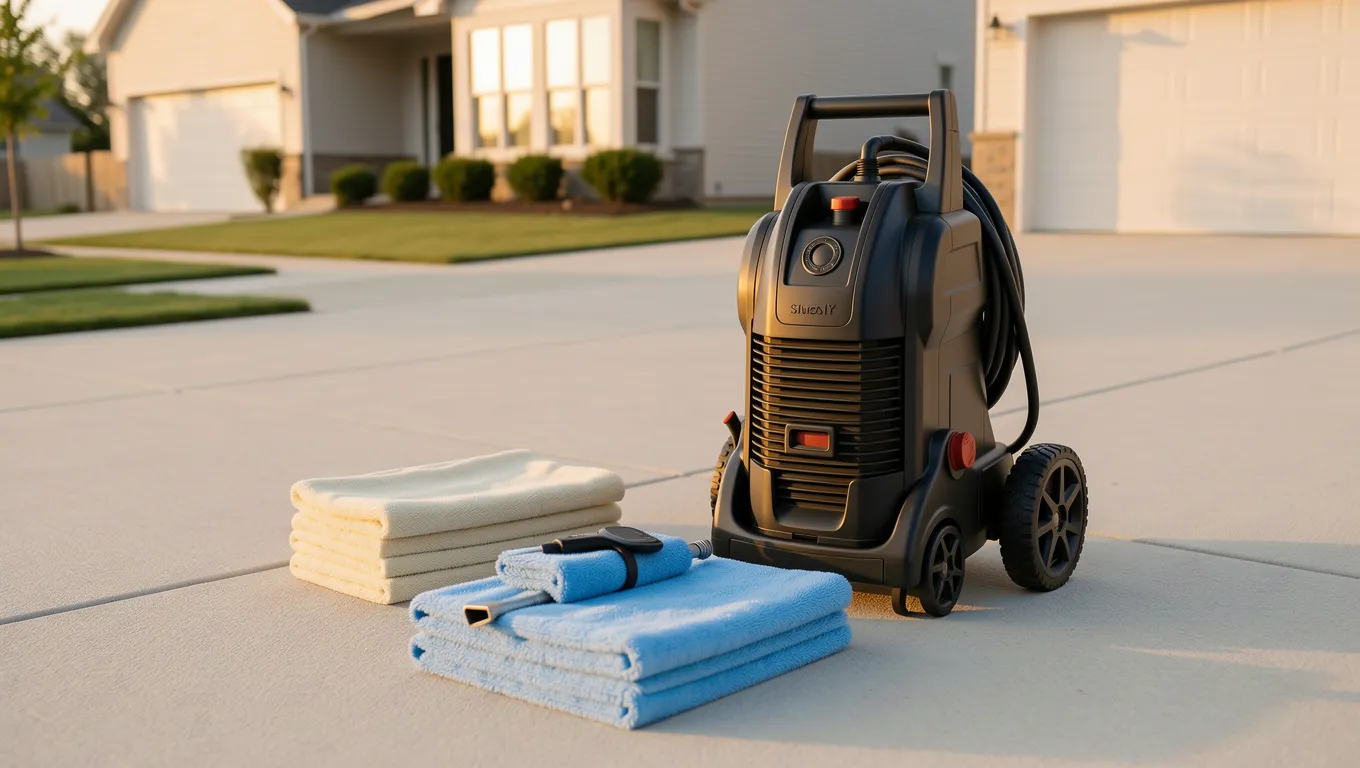
Service-based businesses remain one of the most accessible paths for new entrepreneurs in 2026. Consider mobile car detailing or residential cleaning services. These models are attractive because you are essentially selling your time and specialized equipment rather than expensive inventory. To get started with a professional mobile detailing setup, you might need roughly $2,500 for high-quality pressure washers, vacuums, and eco-friendly chemicals. When you factor in insurance and basic marketing, your total startup cost could sit around $4,000 .
When deciding between a fixed location or a mobile service, consider the trade-offs. A physical storefront offers high visibility but carries heavy rent and utility costs. Conversely, a mobile service has much lower overhead but requires more investment in vehicle maintenance and fuel. Many successful operators choose the mobile route initially to maximize cash flow while building a client base. One major pitfall is failing to account for your own time as a cost; if you do not charge enough to cover your labor, you are simply buying yourself a low-paying job rather than building a business.

If you possess digital literacy, the freelance economy offers a way to start with almost zero capital. Roles like Virtual Assistant (VA), Social Media Manager, or specialized Bookkeeper are in high demand as small businesses look to outsource administrative tasks. In 2026, the most successful freelancers aren't just performing tasks; they are integrating AI tools into their workflows to provide much higher value. For example, a VA who uses AI to manage scheduling and email filtering can handle three times the clients of one working manually.
To decide which niche is right for you, use this simple 'Skill-Demand Matrix' framework:
E-commerce has evolved far beyond generic dropshipping. In 2026, the most profitable model for individual entrepreneurs is 'Curated Resale.' This involves finding high-quality, niche items—such as vintage electronics, designer home goods, or specialized hobby equipment—and reselling them on targeted marketplaces. Because you are adding value through curation and authentication, your margins can be significantly higher than standard retail.
Let's look at a concrete example of the math involved in curated resale. Suppose you acquire a lot of 20 vintage cameras for $50 each (a total investment of $1,000 ). If you clean, test, and photograph these items expertly, you might sell them for an average of $85 each. After accounting for platform fees (approx. 15%) and shipping supplies, your net profit per unit could be roughly $20 . In this scenario, a $1,000 investment yields a $400 gross profit after expenses, representing a strong return on capital.
However, you must watch out for the most common pitfall in e-commerce: Inventory Bloat. This happens when all your cash is tied up in products that aren't moving. To avoid this, always maintain a 'liquidity buffer.' Don't spend 100% of your profit on more inventory; keep at least 30% for unexpected expenses or sudden market opportunities. According to data from credit bureaus like Experian, maintaining a healthy cash flow is often more critical to small business survival than high gross sales numbers.
As urban populations continue to densify in 2026, the demand for premium pet services has skyrocketed. People are no longer just looking for a dog walker; they are looking for specialized care such as 'Puppy Socialization Assistants' or 'Senior Pet Caregivers.' This is a high-trust industry, meaning your reputation and reliability are your most valuable assets.
Consider the revenue potential of a professional pet walking service. If you charge $30 per walk and secure just 15 walks a week, you generate $450 in weekly revenue. Over a year, that is $23,400 of gross income from a single part-time commitment. This can be scaled by hiring other walkers as your client list grows, transforming a solo hustle into a local agency.
There are nuances here that many beginners miss. For instance, you must consider the legal and insurance requirements for pet care in your specific municipality. Never operate without professional liability insurance; one accidental injury to a pet or a client's property can end your business before it begins. Comparing this to other service models, pet care has very low equipment costs but high 'reputation risk.' Unlike cleaning a house, where a mistake is an inconvenience, a mistake with a living creature is a significant liability. Therefore, investing in certification and specialized training is not just a good idea—it's essential for your long-term survival.
The 'last-mile' delivery problem continues to be a major hurdle for e-commerce giants, creating massive opportunities for local entrepreneurs. In 2026, specialized courier services—those that handle delicate items, temperature-sensitive goods, or scheduled white-glove deliveries—are finding huge success. You don't need a fleet of trucks; you might start with a reliable fuel-efficient vehicle and a smartphone.
However, the logistics sector is highly sensitive to external economic factors. For example, shifts in interest rates can impact the cost of leasing new electric delivery vans, which are becoming the industry standard due to urban emissions regulations. When planning your budget, you must account for these fluctuating costs. A common pitfall in logistics is ignoring the 'true cost' of vehicle ownership; fuel, maintenance, and depreciation can quickly eat up a thin profit margin.
To manage this effectively, use a detailed cost-per-mile tracking system from day one. If you are charging a client $45 for a delivery that takes 30 minutes but costs you $12 in fuel and vehicle wear-and-tear, your actual profit is much lower than it appears on paper. Success in this field requires being as good at mathematics as you are at driving. While some entrepreneurs look to traditional bank loans for expansion, others may find that smaller, more flexible funding options through services like Micro Loans can provide the quick capital needed for a new vehicle or upgraded routing software.
Once you have chosen your idea, the final hurdle is determining how to fund it. In 2026, we see a diverse range of options: personal savings, credit cards, microloans, or even small business grants from local municipalities. The key is matching the type of debt to the type of asset you are buying.
For example, if you are buying equipment for a service business (like a pressure washer), a short-term microloan might be appropriate because the equipment has high resale value and can act as collateral. However, using high-interest credit card debt to fund inventory for an e-commerce shop is extremely risky due to the unpredictable nature of retail sales. Let's run a final calculation: if you need $8,000 to launch your chosen business and secure a loan at 15% APR over 24 months, your monthly payment would be approximately $390 . You must ensure your projected monthly net profit is significantly higher than this number to create a safety margin.
Ultimately, the most important step in navigating capital is having a 'Plan B.' What happens if your first three clients don't pay on time? Or what if your equipment breaks down in month two? A resilient entrepreneur always maintains a cash reserve. As you prepare for this journey, remember that while 2026 offers incredible opportunities for those with the right plan, the most successful businesses are built on steady growth and disciplined financial management rather than rapid, debt-fueled expansion.
Borrowers weighing this choice often look at bad credit loans and personal loans for bad credit as well.